How to use the STAR interview method to show how you acted
The STAR interview method answers a behavioral question in four parts: Situation, Task, Action and Result. Keep the situation and task short, spend most of the answer on the actions you personally took and why you chose them, then give the result against your goal. MockRun uses STARI, which adds Improvement for what you learned or changed afterwards.

What the STAR method stands for
Amazon’s interview preparation pages tell candidates to “use the STAR method to frame your responses” and say interviewers focus on the what and how of your experience, along with why you made your decisions (Amazon’s Applied Scientist interview prep). Other companies ask behavioral questions the same way, even when they don’t name the method.
- Situation: where you were, what was at stake and what made it hard.
- Task: the goal you were responsible for, in a sentence or two.
- Action: what you did, in order, with the reason for each choice.
- Result: what changed compared with your goal, with a number when you have one.
- Improvement: what you would do differently, or what you changed afterwards.
Improvement is the I in STARI. Interviewers often ask “What would you do differently?” as a follow-up, so a sentence or two of reflection makes the answer sound finished.
Spend most of a STAR answer on the action
A common problem is an answer that is mostly situation. The candidate spends three minutes on the org chart and the deadline, says “so we fixed it” and jumps to the result. The interviewer still doesn’t know what you did.
A Day One Careers breakdown of Amazon STAR stories suggests giving roughly two thirds of the answer to action, with about 15% on situation and 10% on improvement. Use those numbers as a sense of emphasis. Nobody is timing your sections.
Action is also where what you did and how you did it come apart. Two candidates can both say “I met with the other team and then escalated to my manager.” One forced a decision. The other listened, checked their own assumptions and changed the plan. Only your explanation of how you acted, and why, tells the interviewer which one happened.
A STAR method example, step by step
- Pick one real occasion. A single event with a decision you made. “I always check with legal” is a habit; the interviewer wants the time it mattered.
- Set the situation in two sentences. Who was involved, what was at stake and what made it difficult.
- State the task as your goal. Use “I”. If the goal belonged to the team, say which part was yours.
- Tell the actions as decisions. For the choices that mattered, mention an option you passed over and why, where there was one.
- Compare the result with the goal. A number, a date or an observable change. If you missed the goal, say so.
- Close with the improvement. One thing you changed afterwards or would change next time.
- Situation
- I ran billing support at a 40-person software company. Refunds needed three approvals and took eight days on average, and some customers disputed the charge with their bank while they waited.
- Task
- I wanted refunds under $200 settled within two days without raising fraud losses.
- Action
- I pulled six months of refunds and found that 85% were under $200, with no fraud among them. Removing approvals entirely would have worried finance, so I proposed one approval for small refunds and a weekly audit of a random sample. Finance was concerned about abuse, so I offered a one-month trial and shared every audit result before we made it permanent.
- Result
- Small refunds went from eight days to one. Bank disputes fell from eleven in the month before to two, and the audits found no misuse.
- Improvement
- I hadn’t walked the support agents through the new rule, and two of them kept escalating everything. Now I rehearse a process change with the people who will follow it before launch.
Written for this guide. The company, people and figures are invented.
How to practice the STAR interview method out loud
Knowing the structure is the easy part. Under questioning, the follow-up tends to land exactly where your notes run out. In MockRun you answer one behavioral question out loud, or type if you prefer. Guided practice keeps a short STARI guide beside the answer. After the follow-ups, the debrief sorts what you said into Situation, Task, Action, Result and Improvement, quotes the words behind each note, and names one detail to explain next.
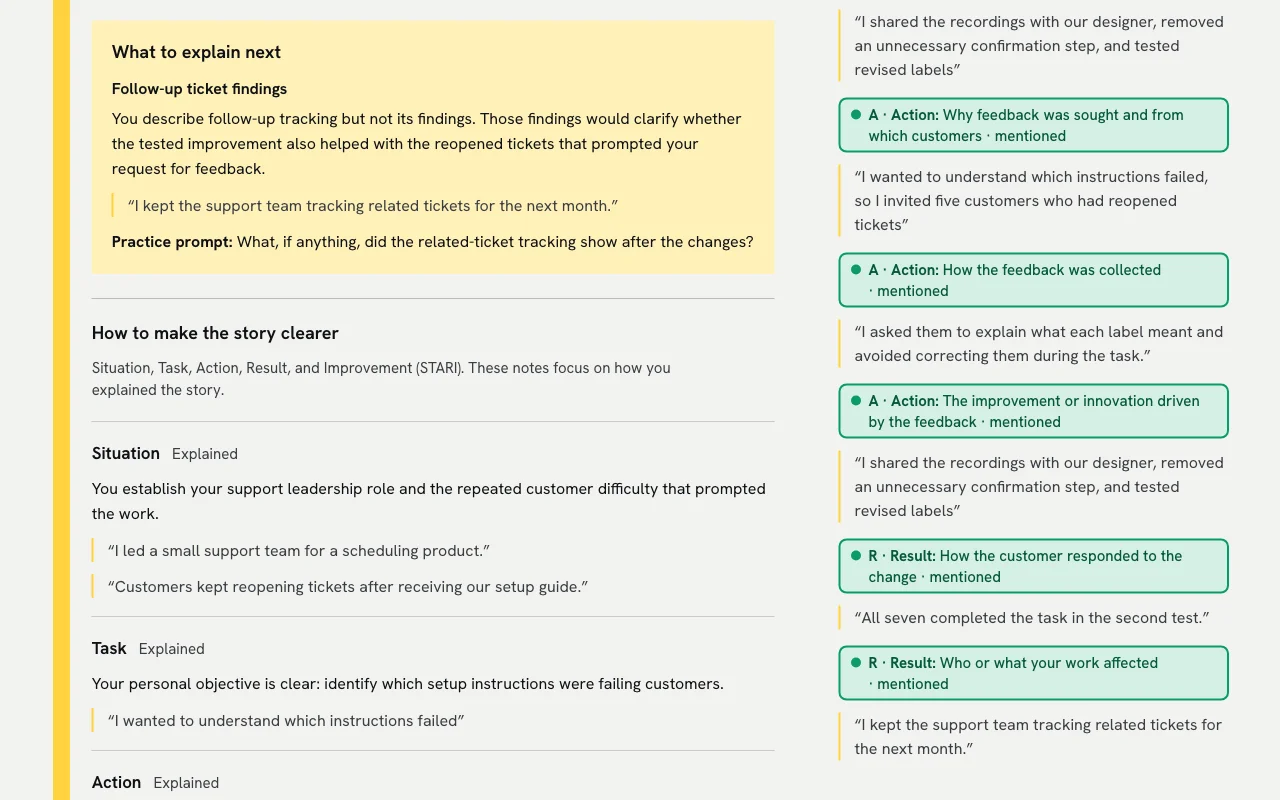
If the parts are all there but the answer runs long, read how long an Amazon interview story should be. If the action section feels thin, the follow-up questions guide shows what an interviewer is likely to ask next.
Common questions
What is the difference between STAR and STARI?
STARI adds Improvement to Situation, Task, Action and Result. It covers what you learned or changed afterwards. Interviewers often ask for it as a follow-up, so including a short version makes the answer feel complete.
Can I use the STAR method for a project that failed?
Yes. Describe the result honestly, including what did not work, and use the improvement part for what you changed because of it. Amazon’s own preparation advice asks for examples of risks, failures and how you grew.